

Delving into the Secrets of Kava: Groundbreaking Discoveries in Morphology and Chemical Composition in 1995.
Vincent Lebot’s paper “The Origin And Distribution Of Kava” in Canberra Anthropology delves into the origin, distribution, botany, and genetic variation of kava (Piper methysticum), a psychoactive plant native to the Pacific Islands. The study identifies Piper wichmannii as the likely ancestral candidate for P. methysticum and locates its origin in Melanesia. Through extensive analysis, including High Performance Liquid Chromatography (HPLC) and isozyme analysis, the paper reveals substantial differences among kava cultivars and concludes that P. methysticum is a group of sterile cultivars selected from somatic mutants of P. wichmannii.

Readdressing the Pacific Kava Paradox: Discoveries on Hepatotoxicity and the Urgent Need for Quality Control. 2012.
The paper titled “Kava Hepatotoxicity in Traditional and Modern Use: The Presumed Pacific Kava Paradox Hypothesis Revisited” challenges the previously proposed Pacific kava paradox hypothesis. It presents evidence that not only Western acetonic and ethanolic kava extracts but also traditional aqueous extracts may be hepatotoxic. The primary cause of toxicity may be linked to poor quality raw material contaminated by mold hepatotoxins. The findings emphasize the importance of quality control in kava production and have significant implications for public health policies.

Essential Perspectives on Kava and Christianity in Central Vanuatu 1995: Decoding the complex relationship.
Michael W. Young’s 1995 paper “Kava and Christianity in Central Vanuatu” delves into the intricate relationship between kava consumption and Christianity in Vanuatu. It explores the historical opposition by the Presbyterian Church, the cultural significance of kava, and the transformation of kava-drinking from a symbolic practice to a secular and urbanized pattern. The paper also includes an ethnographic account of kava-drinking practices in Nikaura, Epi, reflecting the broader cultural and political dynamics surrounding kava in the region.

Unveiling the Truth: Comprehensive Findings Proving the Safety of Ethanolic Kava Extract in Rats
The 2006 study by Sorrentino, Capasso, and Schmidt in Phytomedicine investigates the chronic toxicity of ethanolic kava extract in rats. Conducted over 3 and 6 months, the study found no signs of toxicity in the rats, including no relevant differences in body weight, hematological or biochemical parameters, and organ weights. Slightly elevated values of certain liver enzymes were observed but were still within the normal range. The study concludes that the ethanolic kava extract is non-toxic and does not support the suspicion of potential liver toxicity, aligning with the long tradition of kava drinking in the South Pacific.

Revolutionizing Anxiety Treatment: 8-Week Clinical Trial Reveals the Powerful Efficacy of Kava-Kava Extract LI 150 in 129 Patients with Generalized Anxiety Disorder
The 2003 study by Boerner et al. presents an 8-week randomized, double-blind trial involving 129 out-patients, assessing the efficacy and safety of Kava extract LI 150 in Generalized Anxiety Disorder (GAD). Conducted across 18 community doctors in Germany, the study found Kava Kava extract to be effective in treating GAD, with no significant hepatotoxic reactions reported. The results were compared with Buspirone and Opipramol, adding valuable evidence to the understanding of Kava’s therapeutic effects in anxiety disorders.

Challenging Assumptions: 2003 Key Letter Describes the Pitfalls of the Glutathione Theory in Kavalactones’ Hepatotoxicity
The paper by Mathias Schmidt in 2003 critically explores the potential hepatotoxicity of kavalactones in kava extracts, including an examination of the glutathione theory. Through various studies and experiments, both published and unpublished, the document emphasizes the lack of concrete evidence supporting the hepatotoxicity of kavalactones. It also highlights the complexity of kava extracts and the challenges in determining their safety and efficacy, comparing kava with other plants like St. John’s wort and discussing the content of kavalactones in native kava drinks versus artificially enriched extracts.
New Roots: The Rise of Single Cultivar Kavas and the 2 Key Challenges Facing the Industry’s Positive Transformation
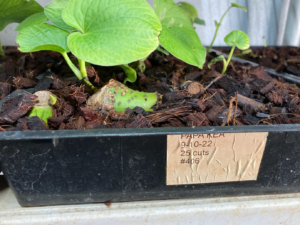
The term “cultivar” in the context of kava refers to specific plants that have been selected for desirable traits and are propagated as genetic duplicates of the original. The creation of different kava cultivars is achieved through somatic mutations, leading to variations in appearance and chemical composition. Historically, different cultivars were often combined in production, but there is a growing trend towards marketing single cultivar kavas. This shift necessitates careful handling, cleanliness, and accurate identification of cultivars, with some facilities exploring DNA marking for precise differentiation. The rising demand for single cultivar kavas emphasizes the importance of proper handling and identification within the industry.

Rediscovering Origins of kava: The Historic Legacy of Piper Wichmannii and the Exploration that Named Kava’s Wild Progenitor in the Early 1900s
In the early 1900s, Dutch explorers embarked on an expedition to the North Coast of West Papua, then known as “Netherlands New Guinea,” in search of coal deposits. Among the team was Arthur Wichmann, a geology professor and the namesake of wild kava’s scientific name, “Wichmannii.” During this expedition, various indigenous plants were cataloged, including kava’s wild progenitor, Piper Wichmannii, or “Wild Kava.” The naming and details of this discovery were later published in Wichmann’s two-part publication “Nova Guinea.”
Exploring the Healing Power of Kava: 39 Studies Illuminate the Anticancer Potential of Kava Constituents.
The systematic review by Celentano et al. delves into the protective effects of kava constituents against various types of cancers, including oral squamous cell carcinoma. The review, following the PRISMA protocol, analyzes 39 articles, focusing on the anticancer properties of kava such as antiproliferative effects, apoptosis induction, and its potential as a chemotherapeutic agent. Key findings include the antiproliferative ability of Flavokavain B (FKB) and the apoptosis-inducing effects of Flavokavain A (FKA), with a general consensus on kava’s promising anticancer capabilities.